
Happy International Women’s Day! Today, we’re bringing you fiction that features ‘difficult’ women. What does this mean? It means we’re shouting out books that feature women who are deemed – either by characters in the novel itself or by our society – as hard to control, don’t follow patriarchal or societal expectations, may have ‘unlikeable’ personalities, or just often painted with the word ‘bitch’. We love these women and you should too.
Demi’s pick:
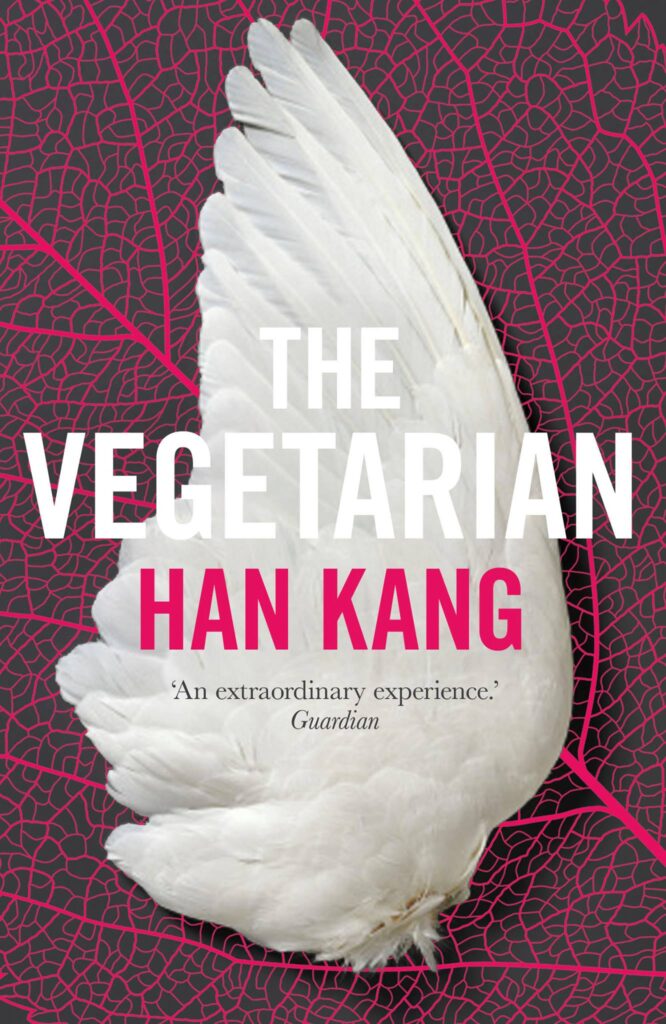
The Vegetarian by Han Kang: Yeong-hye
Yeong-hye is a woman who is considered unremarkable in every way by her husband who is keen to live an uneventful life, sticking to societal norms to a fault. She was chosen by him for her plainness, her predictability, her capacity to be a diligent wife. You can imagine his horror when he finds her discarding all the meat products in the house after having a nightmare, deciding to become a vegetarian. Yeong-hye’s vegetarianism, in the eyes of her husband, leads to her being unable to perform her ‘wifely duties’. Her refusal to eat meat, cook meat, have sex, results in her body becoming a site of violence at the hands of the men in her life. The reader is forced to view her eventual decline through the eyes of her husband, her brother in-law and her sister, all of who are unable to understand her choices, placing their own expectations onto her. Yeong-hye can be seen as attempting to establish her own identity in a patriarchal society, and this very notion leads to an unfathomable fallout.
Ellie’s pick:
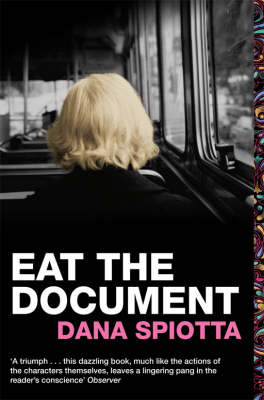
Eat the Document by Dana Spiotta: Mary Whittaker
Following her involvement in a series of radical protests against the Vietnam War, activist-turned-fugitive Mary Whittaker is forced into hiding, adopting multiple personas in an attempt to conceal her true identity from everyone around her. The narrative jumps between the 1970s and the 1990s, gradually revealing more details about the leftist cell that Mary and her boyfriend Bobby Desoto belonged to, Mary’s chaotic and transient existence in the years following the group’s disbandment, and her new life as a stay-at-home suburban mother. Mary’s anonymity makes her simultaneously powerful and powerless; though she intentionally uses society’s underestimation of women to her advantage, she is manipulated by others in equal measure. The novel explores idealism, activism and the politics of violent protest. All of the central characters are flawed – perhaps none more so than Mary – and the reader is left to make their own moral judgements.
Jenna’s pick:
Convenience Store Woman by Sayaka Murata : Keiko
Thirty-six-year-old Keiko has never wanted a boyfriend; nor does she desire to give up the supermarket job she’s had for eighteen years. These facts are not about to change now, no matter what her family and friends think. An immersive peek into the life of a strange and uncompromising woman – one whose oddness is never diluted in an effort to increase her likeability. As funny as it is feminist, this is the perfect read for International Women’s Day.
Lisa’s pick:
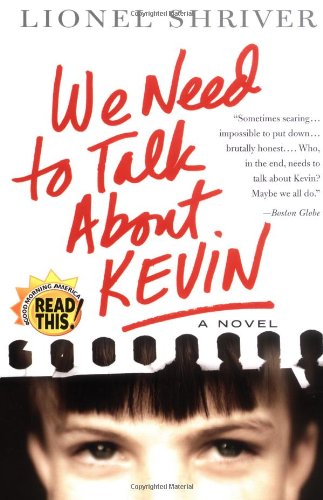
We Need to Talk About Kevin by Lionel Shriver: Eva
One of the first major campaigns I worked on – although I didn’t realise at the time how big the novel would become – is Lionel Shriver’s We Need to Talk About Kevin, which over 20 years later is still part of our cultural lexicon. I was working for a small independent publisher at the time called Serpent’s Tail (which is now part of Profile) and we acquired the novel after many corporate publishers had turned it down. The central character Eva Khatchadourian’s son Kevin commits an horrific high school massacre and the novel is told through a series of letters from Eva to her estranged husband Franklin in the aftermath of the crime. Eva had always been ambivalent about motherhood and showed little love towards her son and has been termed an unlikeable or difficult character. She admits to disliking her son from birth, which could also be read as severe post-natal depression, and the novel oscillates between nature v nurture as the root of Kevin’s behaviour, which escalates to extreme violence as he grows older, for which Eva is vilified and becomes a social pariah. Yet, the novel doesn’t advocate for either nature or nurture as the cause and Eva’s ambivalence towards motherhood resonated with many reader’s own unspoken and – at that time – somewhat taboo feelings and fears about motherhood, taken to its most extreme in the novel. We Need to Talk About Kevin is an uncomfortable yet compelling read which interrogates sexism and opened up new conversations around maternal ambivalence. The novel went on to win the Orange Prize for Fiction (now the Women’s Prize for Fiction), sold over a million copies and was adapted to a film starring Tilda Swinton.