
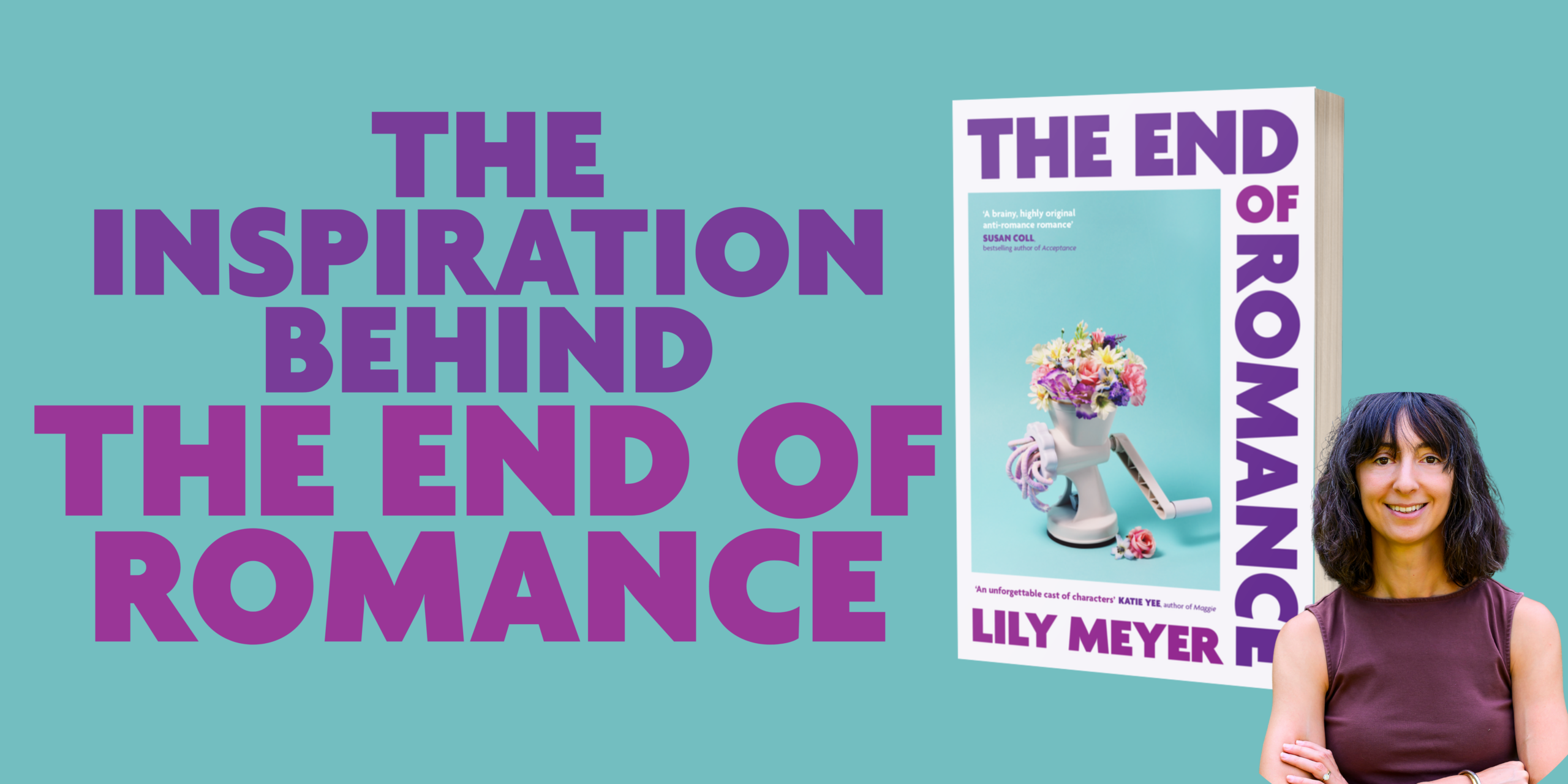
The End of Romance is very loosely based on Isaac Bashevis Singer’s novel Enemies, A Love Story, which came out in Yiddish in 1966 and English in 1972. I read it in 2019, at which point I had been immersing myself in American Jewish literature for a decade, but it was my first of his books. Nobody ever talks about Singer when they talk about Bellow, Malamud, and Roth; in my life, almost no one but me talks about Singer, period. Although he is an agreed-upon, Nobel-winning literary legend, he seems to be waning from view. Consensus can have that effect, I know, but I’d like to reverse it. He’s become a massive influence for me.
In his Nobel acceptance speech, Singer praised “the Yiddish language and the conduct of those who spoke it” for their “quiet humor [and] gratitude for every day of life, every crumb of success, each encounter of love. The Yiddish mentality is not haughty. It does not take victory for granted. It does not demand and command but it muddles through, sneaks by.” I buy most of that, but not the “demand and command” bit. Singer is a snappy, assertive prose stylist – not showy, but supremely confident. He writes more frankly and oddly about sex than the vast majority of twenty-first century writers, and he excels at declarations that seem simple, but get strange when you poke at them. In his story “Gimpel the Fool,” Gimpel justifies all his choices with the one-line theology “Shoulders are from God, and burdens too.” Sure, Gimpel, but what about feet for walking away? Mouths for talking back? Do those not come from God, too?
Commanding though Singer’s sentences may be, though, his characters do nothing but muddle and sneak. All kinds of bizarre things happen to them. They marry demons by mistake; they accidentally get addicted to Baruch Spinoza’s body of work and let life pass them by; they get into catastrophic visa-marriage schemes with spoiled rich girls; they survive the Holocaust. Rarely do their stories end happily, but not many end in total crisis, either. Instead, as the novelist Dara Horn notes in her book People Love Dead Jews, Singer “ended almost every one of his novels not with a resolution but with the protagonist disappearing, whether by running or by literally locking himself into a closet for the rest of his life.”
Horn argues that Singer’s penchant for disappearance endings fits into a pattern of Jewish literary humility. Jewish writers, she thinks, ground their work in the “knowledge that one cannot be true to the human experience while pretending to make sense of the world,” which is too full of strange troubles to be understood. (See: demons, Nazis, etc.). Singer’s abrupt, unsatisfying endings are a perfect example of this knowledge. They make manifest the idea of a Jewish literature that portrays and embraces the instability and incoherence of Jewish history. How could you write a coherent, stable story, Singer’s body of work seems to ask, when life can always be destabilized, along no logical lines, by a landlord, a pogrom, a Hitler, or – as in “The Gentleman from Cracow” – a friendly rich guy who proves to be Satan himself?
I would like to think it is because I am a Jewish writer that I gravitate towards Singer’s approach to endings. I get irritated when novels I like end too happily, and even more irritated at sad endings that I knew were coming, or that preclude future change. I like the idea of an ending that feels like a new beginning; I want to give the reader the sense that a second phase of the story is imminent, and that it will be even trickier, tougher, or stranger than the one I just got done telling. Enemies, A Love Story ends in just this way, and I hope The End of Romance does, too.
The End of Romance will be published on 26th February and is available to order now. If you wish to hear more of Lily Meyer’s thoughts on writing and romance, sign up for her free event Self-Discovery After Heartbreak on 5th March here.