

The term ‘cli-fi’ is a fairly new one. It was first coined by Dan Bloom back in 2011 and is the abbreviation of ‘climate fiction’, a genre which describes literature that is preoccupied by climate change. While ecocriticism has been a topic of discussion in academia for a good while, it comes as no surprise that the cli-fi genre has gained traction in popular and commercial fiction in recent years. It would be bizarre if it hadn’t. Burning forests, scorching temperatures, food scarcity and a myriad of other climate related catastrophes certainly sit at the forefront of the imagination.
Cli-fi is literature’s way of talking back to our climate crisis. Usually through a speculative world, the genre seeks to engage in climate related discourse and encourages the reader to recognise the urgency of our very real and very current situation and take action.
If you’re curious about cli-fi, here are some top recommendations from a self-described cli-fi enthusiast…
Annihilation by Jeff Vandermeer
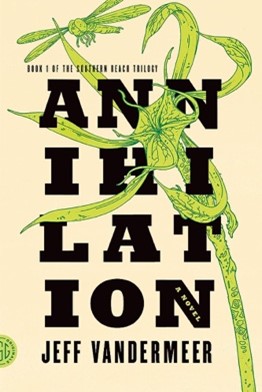
If you like your books weird and wonderful, I recommend trying Jeff Vandermeer’s Southern Reach Trilogy which starts with Annihilation (yes, it was a book first!).
Set some time in our near future, four scientists set out to explore Area X – a large (and steadily growing) section of land which has mutated in bizarre and unpredictable ways. As much a comment on the dangers a quickly changing environment poses to our safety as it is an eerily beautiful appreciation for the (un?)natural world, Vandermeer’s novel is a classic example of the cli-fi genre and would appeal to readers who like to be unsettled by their books.
The Word for World is Forest by Ursula K. Le Guinn
Next up is a cli-fi classic – The Word for World is Forest. Published back in the 1970s and sitting at around 189 pages, this novella is a great introduction to the roots of ecocritical reading. The narrative follows the colonisation of a planet Athshe by humans who enslave the indigenous people and decimate their land. It’s a shocking look at the perversity of humanity in our predisposition to destroy the natural landscape as well as our disregard for those we consider ‘other’. Through such an intense mirror, Le Guinn forces us to confront our own actions here in our present reality, advocating for a non-exploitative relationship to the environment. I’d particularly recommend this one for sci-fi traditionalists who like the classic space travel plus alien combo.
Saturnalia by Stephanie Feldman
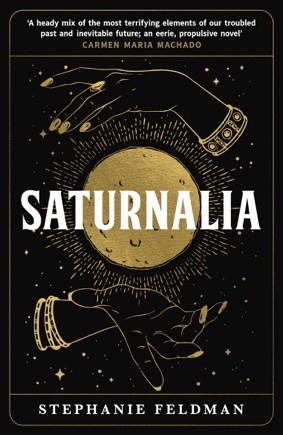
Now for one of VERVE’s books! When I first read Saturnalia as a submission back in 2022, I knew it was a tale we needed to share. Saturnalia is a story about environmental collapse and class warfare, trauma, rebirth and magic. It speaks to the pervasive ecoanxiety felt by GenZ and millennials alike: What will become of humanity if we continue on our current trajectory? And is there space to feel any kind of optimism about our future?
Feldman’s timely narrative is born out of a hyperawareness of the ways in which environmental collapse is shaping our society. Her protagonist lives her life on the periphery in a hostile environment crumbling under the pressures of climate change – a world characterised by extreme weather, economic failure and disease carrying mosquitoes – and one in which she finds herself vulnerable to exploitation. Feldman delicately balances the narrative of sexual assault and environmental collapse, creating a novel which is conscious of the current dialogue surrounding the safety of women in relation to climate change (read more here), and she explores this relationship with an original and compelling voice. If you haven’t added Saturnalia to your tbr yet, there’s no better time than the present.
Scythe by Neal Shusterman
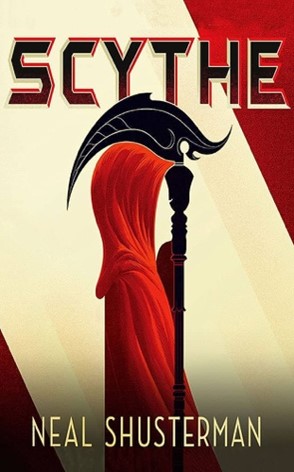
Next up is Neal Shusterman’s Scythe from his Arc of the Scythe series. Jenna (our editor) put me on to this about a year ago, and I’m so glad I read it.
The narrative follows Citra and Rowan as they undergo an apprenticeship to become Scythes – state-permitted assassins made necessary in a world where disease, food scarcity and war have vanished, and the human population has grown out of control. While it’s not ‘traditional’ cli-fi in the vein of Annihilation and The Word for World is Forest, Shusterman’s novel is a perceptive and harrowing speculation on the pressures that humanity puts on our environment, and the problems that we may have to confront in our future.
The series is marketed as YA, but I strongly recommend reading this one no matter your age. Supposedly Universal Studios has a script underway too, so maybe we’ll see this on the big screen at some point!
Gerard Manley Hopkins’ Poetical Works
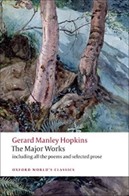
Finally, it would be wrong not to include some poetry in this list. While this isn’t technically cli-fi, I do think we can comfortably place it as an ancestor to the genre so it deserves an honourable mention. There are so many fantastic contemporary ecopoets writing about climate change at the moment, but some of my favourites lived a little while back.
To read Gerard Manley Hopkins’ poetry is to truly appreciate the dynamism of nature. Through his sprung rhythm and his theories of ‘inscape’ and ‘instress’, Hopkins details the intricate relationships between all living things as well as the ecosystem they inhabit, with energy flowing seamlessly from one to the other. It’s hard to read Hopkin’s poetry and not come away feeling a connection to our planet, as well as realising that to inflict damage on our Earth is to inflict damage on ourselves.