I hung back as my husband waited for his turn to speak to the woman at the desk. Why? Because I knew he was going to ask politely to see a man’s severed head.
We were in a museum in Pavia, Italy, where my husband was attending a medical conference. It’s partly because he’s medical that we visit any and all medical museums in our nearby vicinity and partly because I’m a weirdo. Thus, we were at The Museo per la Storia dell’Università di Pavia (the Museum of the Story of the University of Pavia) to see Antonio Scarpa’s severed head. In a somewhat fitting tribute to the ruthless anatomist back in 1832, one of his assistants had taken it upon himself to lop off and preserve Scarpa’s head (also a thumb, an index finger and his urinary tract) during his autopsy.
Truth be told, I wasn’t all that invested in seeing Scarpa’s head. I had my own agenda. I was there that day to see an original Anatomical Venus. I knew she was on display. No asking required.

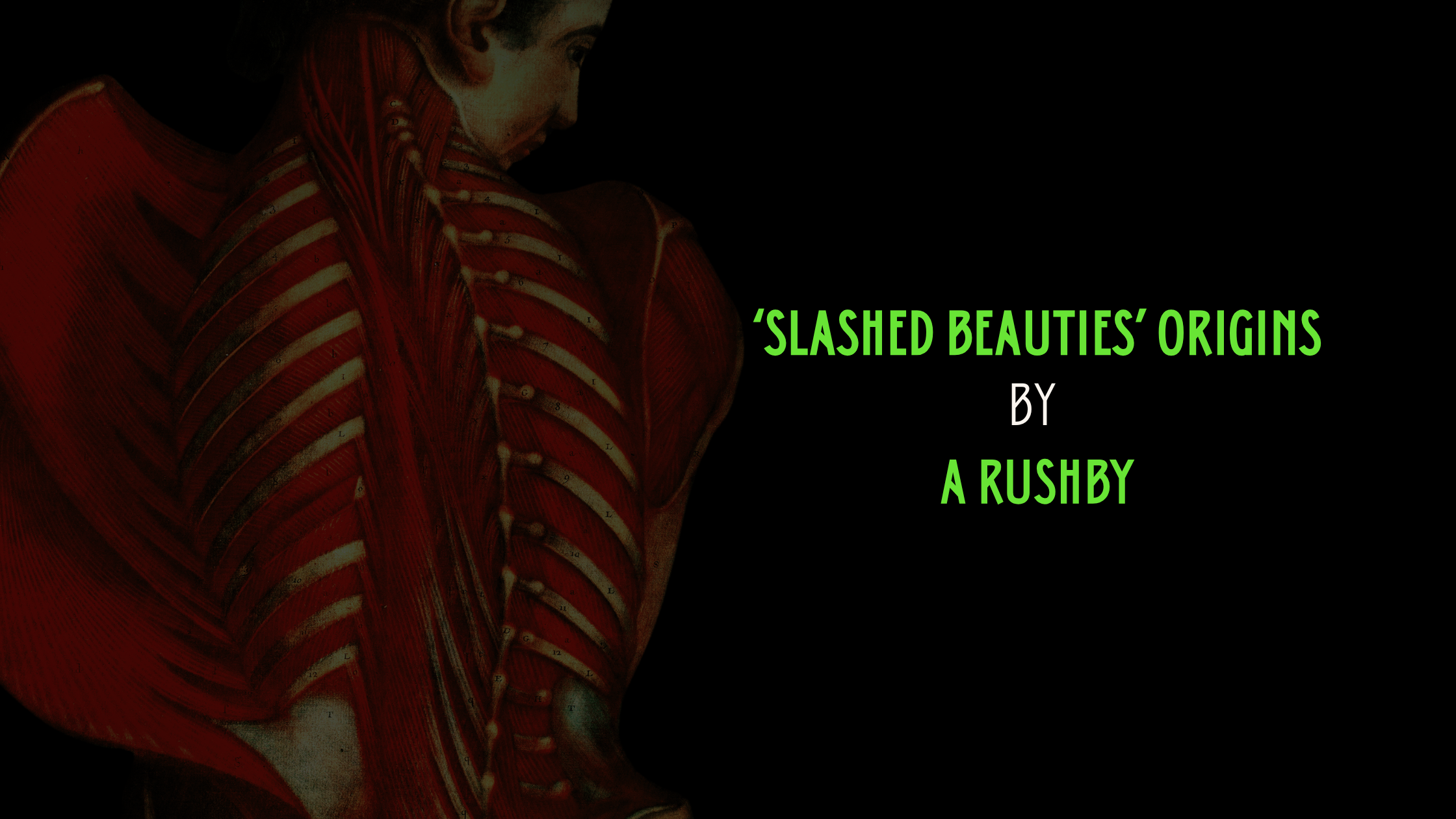
I’d seen my first Anatomical Venus in a museum in Vienna and my love affair had quickly grown from there. Housed within a coffin-like glass case, she was a life-size hyper-realistic anatomical wax figure of an idealised woman. At first glance she was breathtakingly beautiful – supine on a bed of pink silk, a low pillow tucked under her head for comfort, she had unblemished porcelain skin and flowing golden tresses that snaked across one shoulder. Her face sported an erotic expression – her lips parted slightly as if in ecstasy. To top it all off, she wore a lustrous string of pearls at her neck. But then… as the eye travelled down her naked body, things took an entirely different turn. Violence ensued. Her torso was cruelly slashed open, her organs splayed about her for all to see.
That day, in Vienna, my gaze fixed upon her, I found myself taking a step back. And another. There was something deeply unsettling – uncanny even – about this violent mix of beauty and science. She was clearly made to seduce the eye and it seemed very wrong indeed that she was more beautiful and perfect in death than she might have appeared if alive. She oozed perplexingly out of the neat categorical boxes where we like to neatly pop science, art and religion today.
Mostly I wanted to fetch her a blanket, though whether I wanted to cover her up for her own sake or mine, I wasn’t entirely sure.
I’d gone back to my hotel room in Vienna that evening and begun a deep dive on the Anatomical Venus, sometimes called Dissected Graces, or Slashed Beauties. I learnt that they were originally created in the 1780s by Clemente Susini to teach anatomy. Cadavers were, as always, hard to come by and putrefying bodies disagreeable to work with. But why the lush hair, the skin, the expression of ecstasy, the oh-so-pretty eyelashes? Well, mostly because science, art and religion were not so neatly categorised in the 1780s as they are today and also it was believed that attention in the female form might be better sustained if the subject was beautiful to behold. I soon stumbled across a quote from Arnaud-Eloi Gautier d’Agoty, ‘For men to be instructed, they must be seduced by aesthetics. But how can anyone render the image of death agreeable?’ Huh. I thought to myself that night. Turns out you do it with pearls.
I began to order books in order to research further. Joanna Ebenstein’s The Anatomical Venus is the ultimate resource in this area. Plate after photographic plate showcase these beauties wherever they reside around the world asleep forever on their silken beds. When my copy arrived, I absolutely sickened myself staring at its pages, for some of the images within are truly terrifying. One in particular stands out – a wax model of a woman clothed in a beautiful, white lace nightgown. Four ghostly male hands hover above her sponges and glinting metal retractor at the ready – clean white shirt cuffs visible as if they might run off to an evening at the opera… But for now they are busy performing a caesarean section on their patient who has an expression of absolute horror on her face. As well she might be considering she is undergoing major surgery whilst wide awake, her hands and legs tied, her white nightgown ripped open. It is, honestly, the stuff of nightmares, which is why I’ve bought numerous copies of the book and push it upon anyone who is vaguely interested (as I said… weirdo).
Back to Italy, as my husband continued to wait in line, I slunk off to see my Anatomical Venus. She was, of course, glorious, as they all are – stunningly beautiful upon yet another fat pink silken cushion. I took videos. I took photos. I took a selfie. And I just made it back into the next room in time to see my husband and the woman at the desk. She now had a long wooden rod with a hook on it with which she was opening up a special wooden cabinet installed high in a wall.
And there was Antonio Scarpa. Or his head, at least, in all its glory.
Don’t you wish you travelled with us?
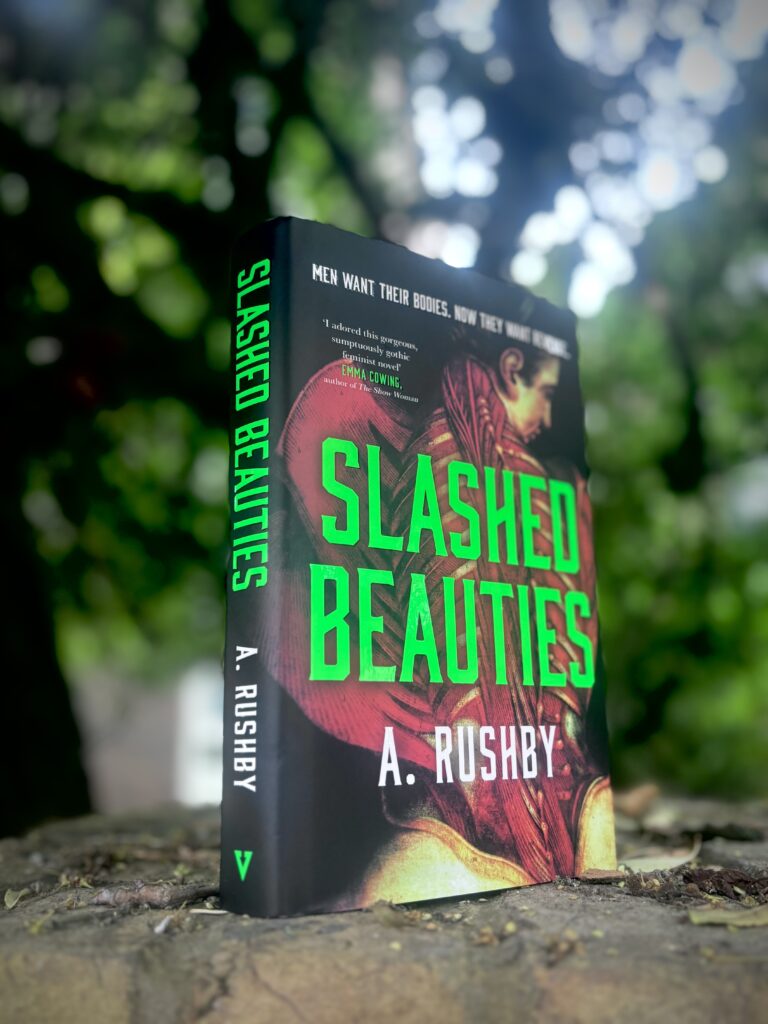
Slashed Beauties by A. Rushby is a spellbinding tale of sisterhood, betrayal and reclamation revolving around three 18th-century wax models of women, known as Anatomical Venuses or ‘Slashed Beauties’. Legend has it, these beauties are bewitched, coming to life to murder men who have wronged them.