
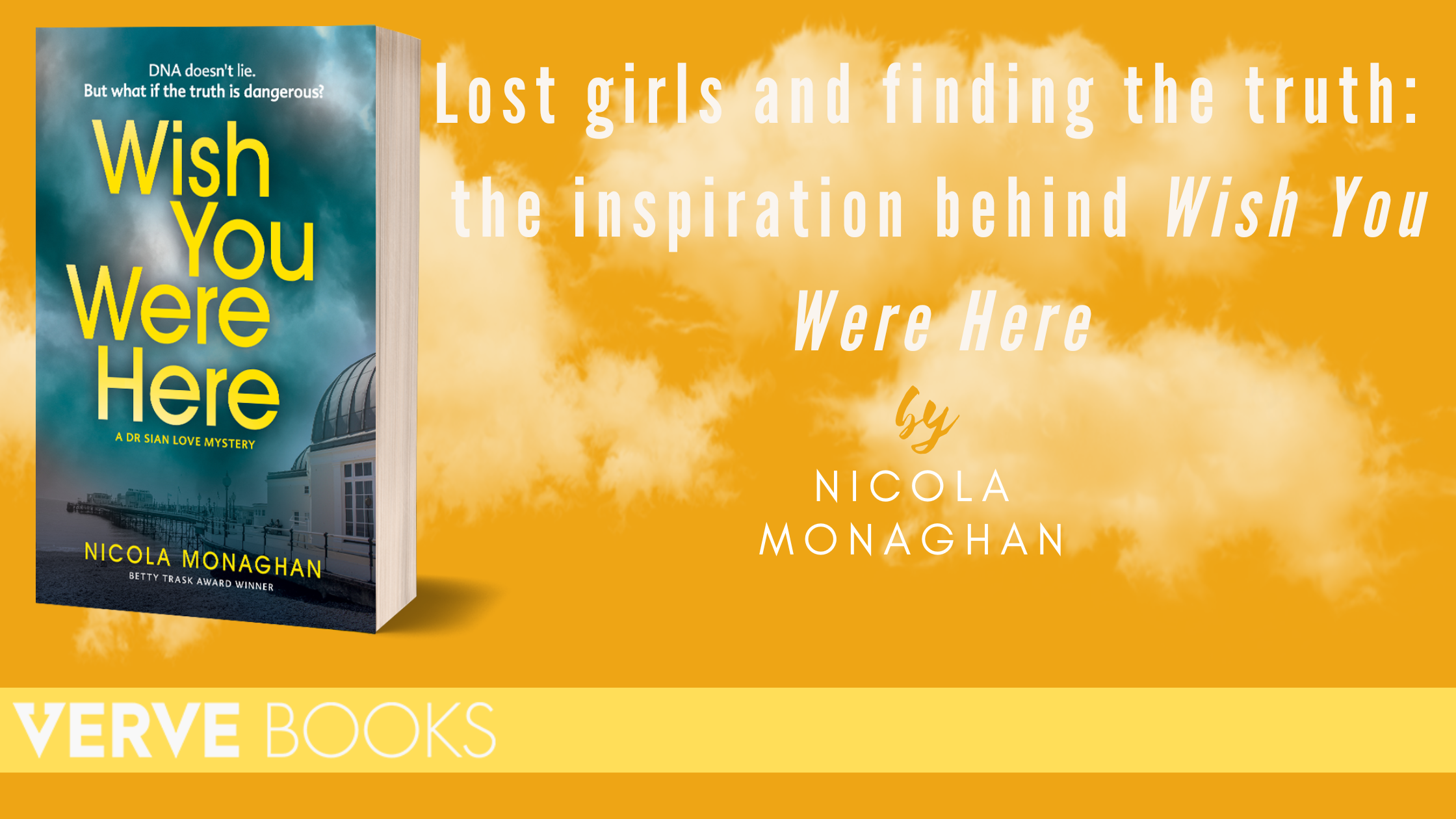
The week my debut novel won the Authors’ Club First Novel Award, Madeleine McCann went missing. I sat in the bar at the Arts Club as a well-known broadsheet columnist and her friends discussed what had happened. I was only vaguely aware of the case at the time – unthinkable now, of course. But that conversation stayed with me. I was especially struck by how the reactions of these affluent, middle-class people to what had happened differed to the reactions of my friends and family back home.
Growing up on a Nottingham council estate as one of six children, the idea of leaving your kids home alone was unheard of. I remember my mum’s horror when she lost sight of my sister for five minutes at the local fair and how that moment of terror stayed with her for years afterwards, the way she replayed it over and over again and tried to work out what she should have done differently. Almost everyone I knew was shocked when they heard that the McCanns had left their children alone while they were out eating at a restaurant. However, the middle-class people I was talking to now saw it differently. It was something any parent might have done, they said, and the main thing we should think about now was the family’s pain, and how we might find the missing child.
It’s interesting to compare this to the reaction to the disappearance of Shannon Matthews, as documented in the Owen Jones book Chavs. He points out how little coverage Shannon received on the front pages in the weeks following her disappearance. At the point Shannon went missing, it was nine months since Madeleine McCann disappeared, and yet she still hit the front pages far more often than Shannon did. Jones also details the difference in the rewards offered in each case and the blatantly class-biased coverage by various columnists, including the person I’d chatted to at the Arts Club that evening. The broadsheets only really lit up with photos of Shannon when the narrative began to fit a certain agenda; when it turned out to be a case of shameless behaviour by the underclass they love to hate.
Everything I experience that has this kind of impact feeds my ideas for writing projects, only some of which then see the light of day. But, in this case, I found characters were emerging. Courtney Johnson, a little girl who disappeared from a beach near Brighton sixteen years ago. Her errant single mother, Lorraine, ultimately driven to suicide, and Courtney’s aunt, Mandy, who continues to look for the little girl and insists she’s still alive.

Often my novels happen when several thoughts collide, and this one’s no different. I saw a documentary about Madeleine that was very compelling but also Sian Love relevant. It featured cadaver dogs, which anyone who’s read Dead Flowers and has already met Sian’s dog, Elvis, will know is an interest of mine. There was also lots about DNA evidence, in terms of what it appeared to imply compared to what it actually did tell us. The programme did some great myth-busting on the subject which my scientific adviser Professor John Brookfield and, indeed, Sian herself would have been pleased to see.
When interviewed, the McCanns insisted they believed Madeleine was still alive. It seemed unlikely, but I wondered how, if they were right, that might be for Madeleine herself. Where she might be, and with whom. What she might think about her life, and what she might suspect and half-remember. If you had moments of thinking that you might be Madeleine, you might well dismiss them and decide you were being silly. Equally, you might become entirely convinced and be completely wrong, as in the recent case of Julia Wendell.
As I thought about those ideas, an image came to me strongly. I could see a young woman walking into Sian’s Nottingham office and saying, ‘I think I’m Courtney Johnson.’ And so came Ana, a woman with questions about her heritage and strange memories she can’t account for. She’s wondered about who her father is for years. She has no idea, only knowing that her mother is lying. When a friend forwards her a computer-generated image of what Courtney might look like at eighteen along with the words ‘lol is this u?’, Ana is afraid it might be. It’s the most interesting case to come through Sian’s door since she opened the agency and so, of course, she takes it on. At the same time, she tries to find out what happened to Courtney. The web of lies, secrets and intrigue she uncovers along the way surprises even a hardened ex-police officer like Sian.
CLICK HERE TO BUY WISH YOU WERE HERE
By Nicola Monaghan