

As Women’s History month marches to a close, we’ve been reflecting on the women in history we admire the most. Scroll down to see who made our (most definitely not exhaustive) list…
Hildegard von Bingen
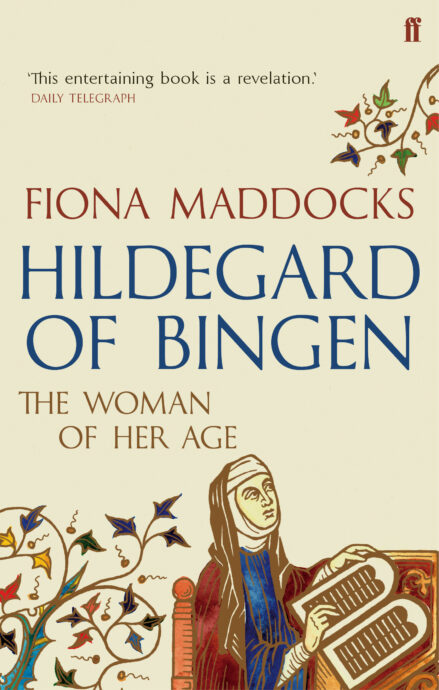
Listen, I’m not the biggest non-fiction reader in the world. Last year, I made a resolution to read at least one non-fiction book a month to try and keep my braincells from rotting, but alas, the siren call of good fiction was too strong. That being said, I’m endlessly fascinated by history, and particularly women’s hidden roles in it.
I came across Hildegard Von Bingen while studying my Master’s degree. She’s becoming a bit more of a household name now and an increasing amount of literature is being published about this fascinating woman and her contemporaries. ‘Who is Hildegard Von Bingen?’ I hear you ask… Well, she’s only one of the grooviest nuns to ever groove. Not only did she found her own abbey, she composed one of the first musical plays, wrote some beautiful poetry, went on preaching tours during the 12th century (something she easily could’ve been put to death for, especially as a woman), and wrote and illustrated some whacky cool visions.
If learning more about her tickles your fancy, I’ve got a couple of recommendations. Fiona Maddocks’ Hildegard of Bingen: A Woman of Her Age is a great place to start as it’s an accessible read, and fairly short. If you want to delve a bit deeper and look at her contemporaries too, check out Janina Ramirez’s FEMINA: A New History of the Middle Ages, Through the Women Written Out of It, which was released in hardback very recently. My favourite, though, is Sara Salvadori’s Hildegard von Bingen: A Journey into the Images, which documents her visual theology through her illustrated manuscripts. If you manage to get your hands on this book, be prepared to witness a wildly colourful and mysterious documentation of a woman’s encounter with God. I’ve never felt more connected to a woman from the past, nor so alienated.
By Sarah Stewart-Smith
Eleanor Marx
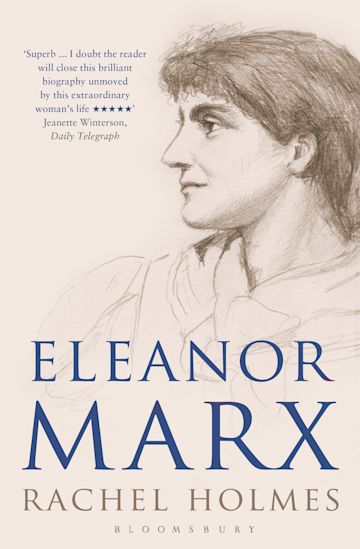
One of the best biographies I’ve read recently is Rachel Holmes’s Eleanor Marx: A Life, a fascinating portrait of Karl Marx’s youngest daughter, who was a forward-thinking feminist, literary translator and pioneer of social democracy in her own right. Despite leaving school at fifteen, Eleanor had a natural gift for languages (speaking French, German and Yiddish fluently) and a flair for the dramatic (often reciting passages of Shakespeare and Shelley from memory). She was the first person to translate Madame Bovary into English, as well as Henrik Ibsen’s An Enemy of the People (for which she taught herself Norwegian from scratch). Actively involved in politics from an early age, Eleanor became her father’s researcher and secretary while still a teenager and accompanied him around the world to socialist conferences and rallies. She soon became a recognised political speaker herself and was an interpreter and translator for the first International Workers’ Congress in London, one of the first female trade unionists and a leading campaigner for the eight-hour day, the end of child labour and the rights of women.
Holmes’s study doesn’t shy away from the tragic and difficult parts of Eleanor’s life, notably her tumultuous relationship with Edward Aveling, but celebrates her tenacity and hard-won victories in the face of engrained patriarchy. Holmes makes ingenious use of primary source material and constructs a biographical narrative that’s compelling, page-turning and genuinely exciting – the twists and turns are as well-executed as the storytelling! I highly recommended for anyone interested in the extraordinary life of a truly ‘modern’ woman, who deserves to be remembered outside of her famous father’s shadow.
By Ellie Lavender
Audre Lorde
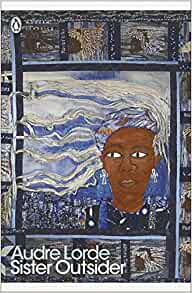
Sometimes, I’m not in the mood to read an entire chapter of something or to get stuck into a complicated plot that requires a lot of attention. So, when I am in one of those moods, I turn to poetry – specifically, Audre Lorde. Her work oozes emotion and strength while she confides in the reader her resentments, her lusts and her regrets.
Lorde describes herself as a ‘black, lesbian, mother, warrior, poet’ (which is just a very cool way of describing yourself) and uses her words to teach, encourage and inspire. Her upbringing as a queer, darkskin, black woman in New York from immigrant parents was difficult, riddled with experiences of homophobia, colourism and racism. She has taken these experiences and explored them further in her numerous essays, my favourite being Sister Outsider, which tackles all facets of oppression with a major theme of identity and sense of self running throughout. However, in my opinion, her poetry is where you can really find yourself in her words, and where she shines. My favourite anthology is The Black Unicorn, in which she turns from her urban roots and looks towards the Amazon and Africa for inspiration, pushing past Western politics and instead finding comfort in tribal narratives. This anthology connects you to the wider world while still making you take a look at yourself and your desires. The perfect balance of looking inward and outward. Whether one singular stanza or a lengthy free form poem, Audre Lorde’s words will light a fire that will blaze in your mind and in your heart long after you’ve put the book down.
By Demi Echezona
Mary Shelley
Mary Shelley is someone you will more than likely have heard of if you were educated in the UK, or if you have a passion for classic English literature. She’s the author of Frankenstein (1818) and is therefore often cited as one of the inventors of the sci-fi genre, as well as an early voice in horror writing. Frankenstein is one of my favourite classics – it’s atmospheric, character-driven and genre-blending and, like all great novels, there are a lot of big themes that emerge though the storytelling. There’s a strong basis for feminist readings of Frankenstein, for example, and the novel also lends itself to queer analysis as well as more philosophical, science vs nature discussions. But if you don’t know much about Mary Shelley’s life beyond Frankenstein, you should! It’s almost as fascinating as her literary talent.
Born Mary Godwin, she was the daughter of William Godwin, a famous philosopher, and Mary Wollstonecraft, a key feminist philosopher, educator, and writer who died just a few days after the birth of her daughter. So, Mary was born into a strong feminist legacy, and her father raised her with a good education – rare for women at that time. Then she met Percy Shelley – a political follower of her father and, latterly, a famous Romantic writer – and the duo embarked on a romantic and writing partnership. Their affair led them to a mansion near Lake Geneva, along with Mary’s stepsister Claire Clairemont and Lord Byron, who were also having an affair, and the writer John William Polidori. Creative inspiration was rife during this trip, and it was here that Frankenstein was conceived.
Mary went on to marry Percy and was heavily involved in his writing up to and after his untimely death in 1822. She went on to raise their only son alone and to establish a career as a professional author in England. If you haven’t read Frankenstein already, it’s definitely one to add to your TBR pile – our sister imprint, Oldcastle Books, actually published a snazzy edition with a pulp-style cover. And there’s an abundance of material on Mary Shelley out there – In Search of Mary Shelley: The Girl Who Wrote Frankenstein by Fiona Sampson is a good place to start.
By Jenna Gordon