
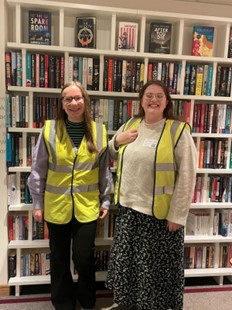
This month, Ellie and I had a bit of an adventure out of our usual day-to-day at VERVE. We were invited to Clays Ltd, one of our printers, to see how books were made. If any of you grew up watching Come Outside like myself (spotty plane, shaggy dog… ring any bells?), then you’ll understand why this was a dream come true.
After a two hour trek in the car up to the factory in Norfolk, we were welcomed by our wonderful contacts Vicky and Toni, who kicked off our day with a presentation about the history of Clays, how the factory operates and the all-important role of the pre-press team. Ellie works in production, but a lot of it was new information to me and made me aware of how some unexpected errors can occur when books are sent to print, and how to best avoid them. They also took us through their sustainability model and climate action goals; they are highly involved in multiple sustainability action groups within the publishing industry and are already a ‘zero to landfill’ company, with targets to reach net-zero emissions by 2050.
After that came the fun stuff! We pulled on special safety shoes – they looked like trainers, but had steel-capped toes – a high-vis jacket and some ear protectors. And then we ventured into the factory.
One of the most interesting things we encountered were the huge printers made by recognisable household brands.
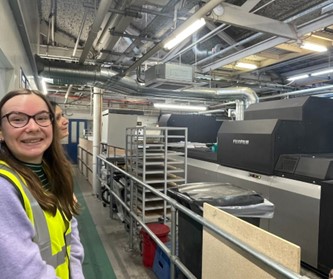
We were shown printing machines as big as coaches, but made by Fujifilm and HP. Can you imagine trying to troubleshoot that if it started to play up and you really needed to get that presentation printed before you left the house? Nightmare.
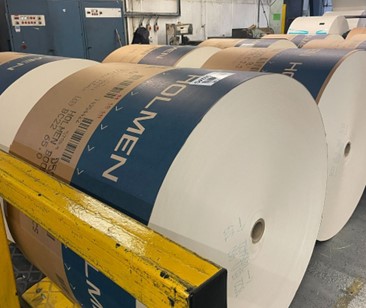
Walking through the factory, we saw rolls of paper that were easily as big as bales of hay. The factory goes through a huge amount of these per day. The text of the book is printed on these long scrolls as one continuous print run (see below) before it is trimmed into book sections.
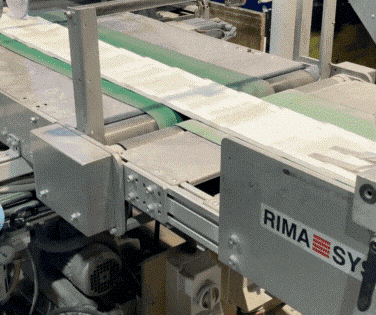
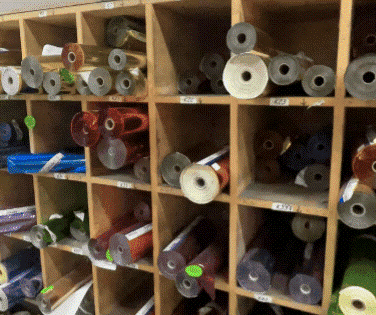
We were shown the various machines that add special finishes to the book cover or jacket, from lamination and spot UV, to embossing and foil. The foils are stored in huge shiny rolls before being fed into the machines and carefully applied, and there were so many colours to choose from! A couple of millimetres can make all the difference and ruin the impact of a special finish, so it was fascinating to see the factory staff lining up the plates by hand and adjusting with tiny screwdrivers to ensure complete accuracy.
We were also lucky enough to see some very under-wraps equipment and also got an exclusive insight into some very beautiful subscription box books having their edges printed and stencilled. We couldn’t take photos of this as it was to be kept hush-hush, but it was amazing to see how these were made and the detailed care taken to make sure each book came out as it should. Another highlight was seeing books getting their edges sprayed:
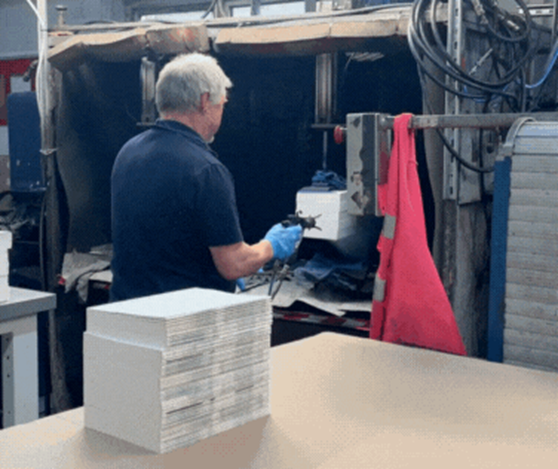
The factory worker would gather a short stack, rough up the edges a bit with sandpaper, and then hand-spray the books. I have quite a few sprayed edges on my shelves now, and it was great to see how their lives began!
At the end of the tour, we also visited the storage facility. This is entirely run by robots, which store and select books with incredible efficiency. This means that embargoed titles are very well-secured and there’s less opportunity for mix ups or books getting out into the world before they should. The shelves were incredibly high:

All in all, we both agreed that our trip to Clays was one of our top days of 2024 so far! We’d like to extend a huge thankyou to the team at Clays for hosting us and for revealing part of the mystery of how a book comes to be.
Sarah & Ellie