
This LGBTQIA+ History Month we are bringing you our favourite queer historical texts pre-21st century! Some of these texts are more well-known than others but all of them deserve to be praised and highlighted for their contribution to queer literature.
Demi’s pick: The Color Purple by Alice Walker (1982)
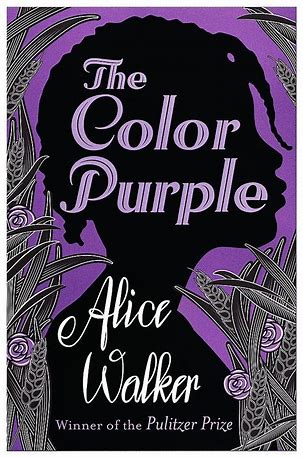
A movie, a musical, a movie musical, Alice Walker’s The Color Purple has been read by millions and loved throughout generations and its clear why. From its insightful and innocent protagonist Celie to the exploration of religion that departs from the oppressive Christian ideals of the time, Walker has created a profound and timeless epistolary novel that is dear to me. Celie’s gradual reclamation of herself, religion and sexuality is refreshing and empowering, ensuring the reader goes on the same journey of self-discovery. This novel being equal parts Black and queer is key to the story as the author makes it clear that both parts are imperative to Celie’s being and growth. Having the protagonist heal through religion and queerness – two concepts that are frequently seen as opposing identities – was done so effectively and elegantly, creating a unique experience that cannot be emulated.
A not so well-known novel that also centers a queer Black protagonist is the speculative fiction vampire novel The Gilda Stories (1991), following Gilda a Black vampire who examines what it means to be human from an inhuman lens. The story is beautiful and harrowing, similar to The Color Purple as you watch this character’s journey of self-discovery. This book subverts what we think about vampires and should be more widely known and appreciated for its contribution to not just queer literature but Black fantasy fiction as well.
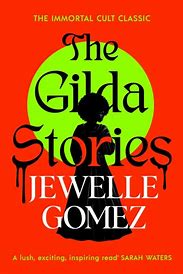
The Gilda Stories by Jewelle Gomez (1991)
Lisa’s pick: Oranges are Not the Only Fruit by Jeanette Winterson (1985)

Winterson’s semi-autobiographical novel is an extraordinary and moving coming-of-age novel told from the perspective of young Jeanette as she navigates growing up with her adopted family in the Midlands, whilst experiencing burgeoning lesbian desire, which is accepted neither by the zealous and domineering Mrs Winterson or the Pentacostal church to which the family belongs. As well as her sexuality, Jeanette’s brilliance and creativity is also stifled in this environment and at 16 she decides to leave the church and her family. Winterson’s novel is a modern classic and has subsequently been adapted for TV and radio dramatization and her later memoir Why Be Happy When You Could Be Normal is also a wonderful read for fans of Oranges.
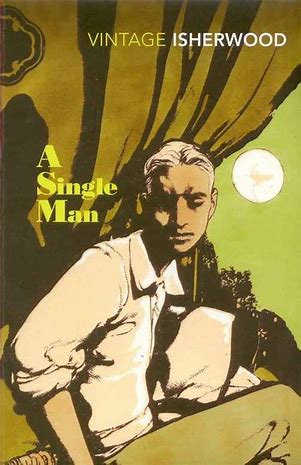
I’d also like to mention Christopher Isherwood’s A Single Man (1964), which has also made it to screen, in Tom Ford’s 2009 film adaptation starring Colin Firth. The novel depicts George – a gay English professor in LA struggling with the death of his long-term partner Jim. It is a slim but incredibly powerful read and is a masterclass in restraint. Published at a time when homosexuality was still illegal in California, the novel was pivotal to the gay liberation movement.
Jade’s pick: Tipping the Velvet by Sarah Waters
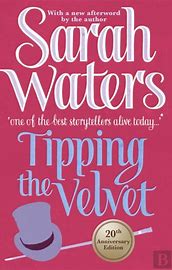
Waters’ queer historical fiction novel published in 1998 is an eloquent and evocative coming-of-age story that follows the main protagonist Nan as she discovers and explores her fluid sexuality and gender identity in rigid Victorian England society. After leaving her sheltered life behind in Kent, she travels to Canterbury where she instantly becomes enamoured with male impersonator Kitty Butler. Their relationship starts off as sisterly, although Nan continues to desire Kitty. However, as they travel together across London, after a jealous fight ensues, Kitty admits her feelings for Nan and the pair begin a secret relationship that is filled with love, passion, and self-discovery. The novel delves into the complexities of queer relationships in a time when such connections were concealed, and Waters’s beautiful writing brings the characters and the queer subculture to life. This is a novel I will always recommend to those who are on the search for a great queer romance that will make you laugh, cry and truly think. Additionally, it was adapted for TV in 2002, starring Bafta nominee Keeley Hawes as Kitty and Olivier nominee, Rachael Stirling as Nan.
Jenna’s pick: Carmilla by Sheridan Le Fanu (1872)

Carmilla by Sheridan Le Fanu, widely acknowledged as an inspiration for Bram Stoker’s Dracula, is required reading for anyone queer who loves horror. Published in the early 1870s, this short story is set in a castle in an Austrian forest where the unexpected arrival of the intoxicatingly beautiful Carmilla destabilises protagonist Laura’s life. The two girls share an intense friendship, complicated by sexual tension and Carmilla’s unpredictable, often strange behaviour… Perfect for fans of gothic romance and classic horror – it’s the vampire romance Kristen Stewart should have been cast in.
Sarah’s pick: Trumpet by Jackie Kay (1998)
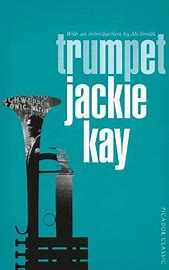
I read Jackie Kay’s Trumpet when I was in school, and it was one of my first encounters with transgender issues and representation. The story focuses on Joss Moody, a famous Black Jazz artist, and starts in the wake of his death. As his son Colman learns that his father was assigned female at birth, his perception of their relationship evolves as he struggles to consolidate his relationship with his father with the prejudice surrounding transgender people. The story is a beautiful reflection on gender, culture and racial identity as well as the difficulties faced of a private life turned public. The book was critical success upon publication in 1998, winning the Guardian Fiction Prize, and a Lambada Literary Prize in 2000. I would strongly recommend this one – the story still sits with me today, over a decade since I first read it.
Ellie’s pick: Maurice by EM Forster
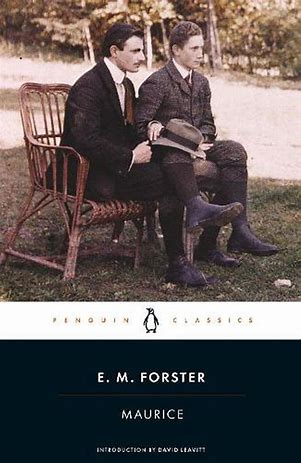
Completed in 1914 but only published posthumously fifty-seven years later, EM Forster’s novel Maurice charts the eponymous protagonist’s exploration of sexuality and his successive relationships with two men, Clive and Alec. Now celebrated as perhaps ‘the original gay romance’, the book has been praised for its landmark portrayal of queer joy and cross-class relationships. It’s also a beautifully written comedy of manners, a scathing rebuttal of privilege and pretence in upper-class Edwardian England and a timeless love story. Highly recommended for romance readers and fans of historical dramas like Gentleman Jack and My Policeman. The brilliant film adaptation of Maurice stars a young James Wilby and Hugh Grant and was directed by James Ivory (who recently won an Oscar for his adaptation of twenty-first century LGBTQIA+ classic, Call Me By Your Name).